Outdoorsy
Built on Bonfire
Lead product designer, Stay GoldOutdoorsy · 2022–2024
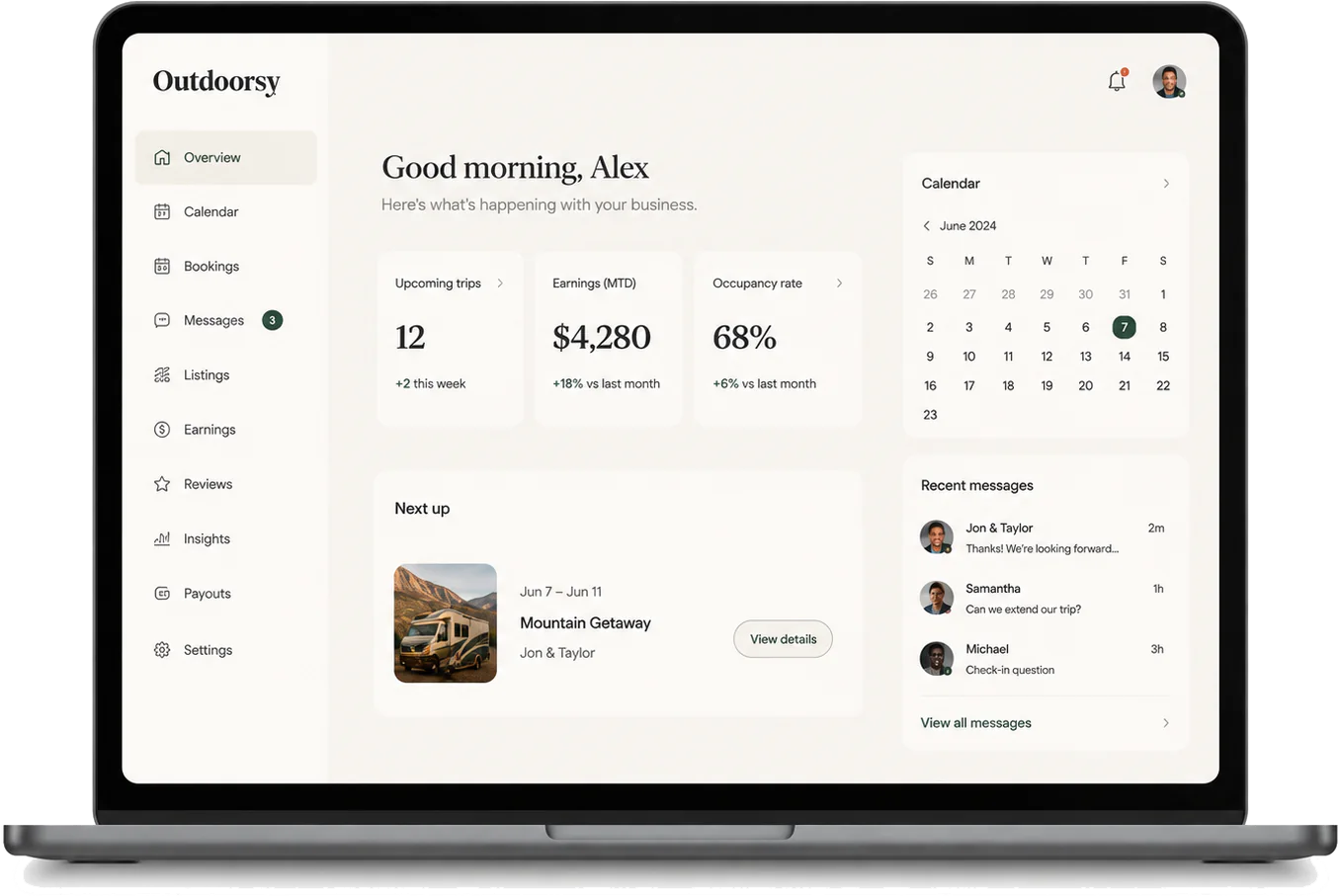
A better host experience, built on a shared design system.
At Stay Gold, I led a four-person design team across three connected efforts for Outdoorsy: a brand refresh, redesigned tools for RV hosts, and Bonfire, the shared design system behind them. I worked with product, engineering, and marketing from research and prototyping through release planning.
Every designer and engineer adopted the system. It later extended to Roamly and Outdoorsy’s glamping offering.
Research
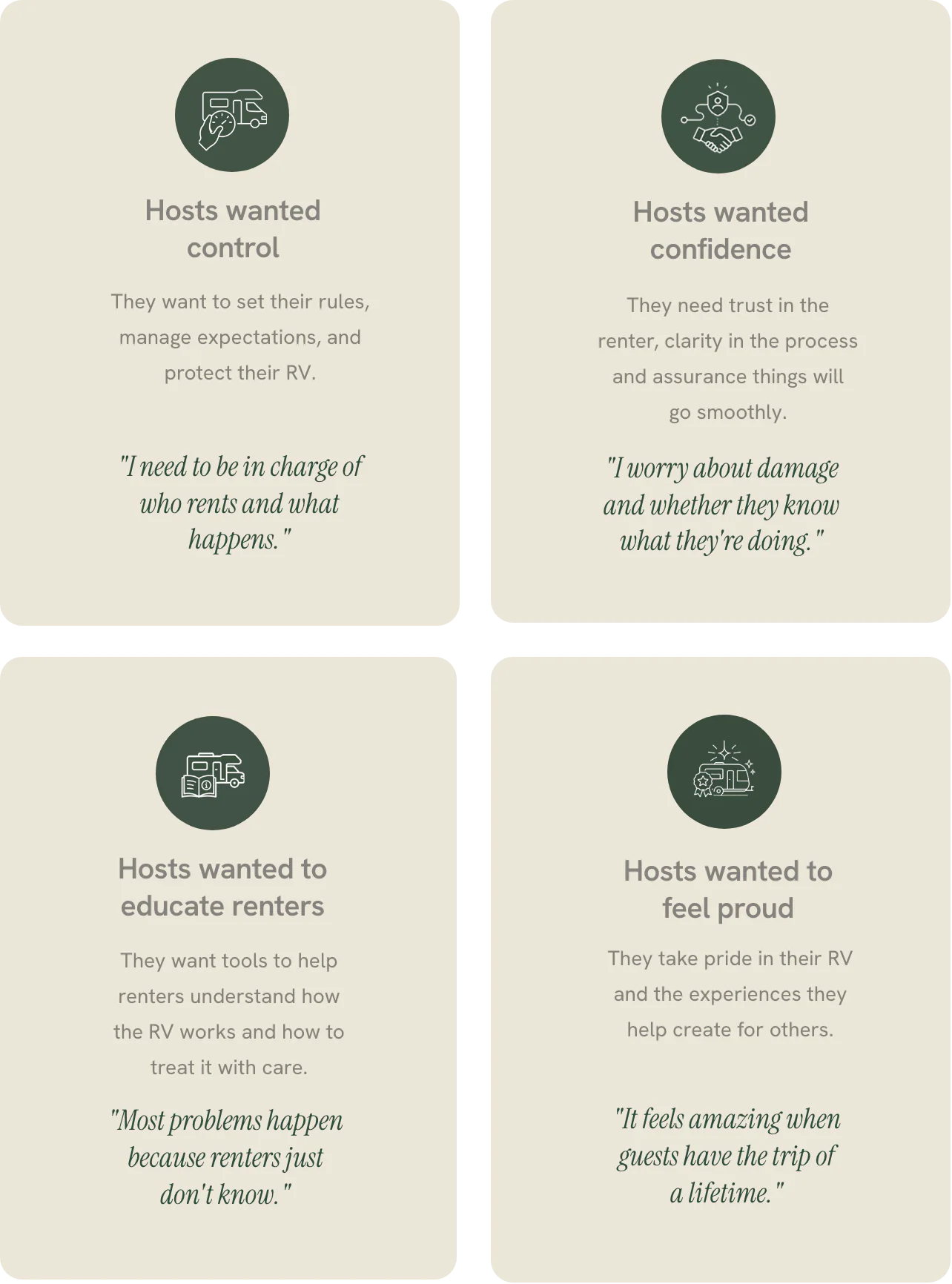
The research included 15 host interviews across the U.S., eight surveys, six usability tests, and 42 support-ticket data points, alongside interviews with product, brand, marketing, mobile, and design leaders. The findings highlighted control, communication, education, trust, time, pride, and protection.
These findings set the priorities. Three in ten new hosts left the platform within a year, and nearly half of those never received a qualified booking request; churn peaked four weeks after a first listing. The listing flow was completing a third of the time, and hosts leaned on support calls to finish it. A third of cancellations came inside forty-eight hours of booking, and more than a quarter of last-minute cancellations were maintenance. Hosts were running key exchanges, instruction guides and renter vetting off the platform because the product gave them nowhere to do it.
Six host archetypes came out of it: the newcomer with one rig and a day job, the super host building packages, the business on its way to pro, the risk-averse owner protecting an expensive asset, the enterprise fleet that never meets a renter, and the casually engaged owner with a listing and no booking. They set the scope for what the tools had to do.
From finding to roadmap
Churn at four weeks and a third-completed listing flow put listing first on the roadmap, with the guidance hosts were getting from coach calls built into the product. Maintenance-driven cancellations put the calendar second, so a host could block a vehicle before a booking sealed. Off-platform key exchanges and renter vetting put messaging third. Analytics came last, for the hosts who wanted to run it as a business.
Product design
From listing an RV to running a rental business.
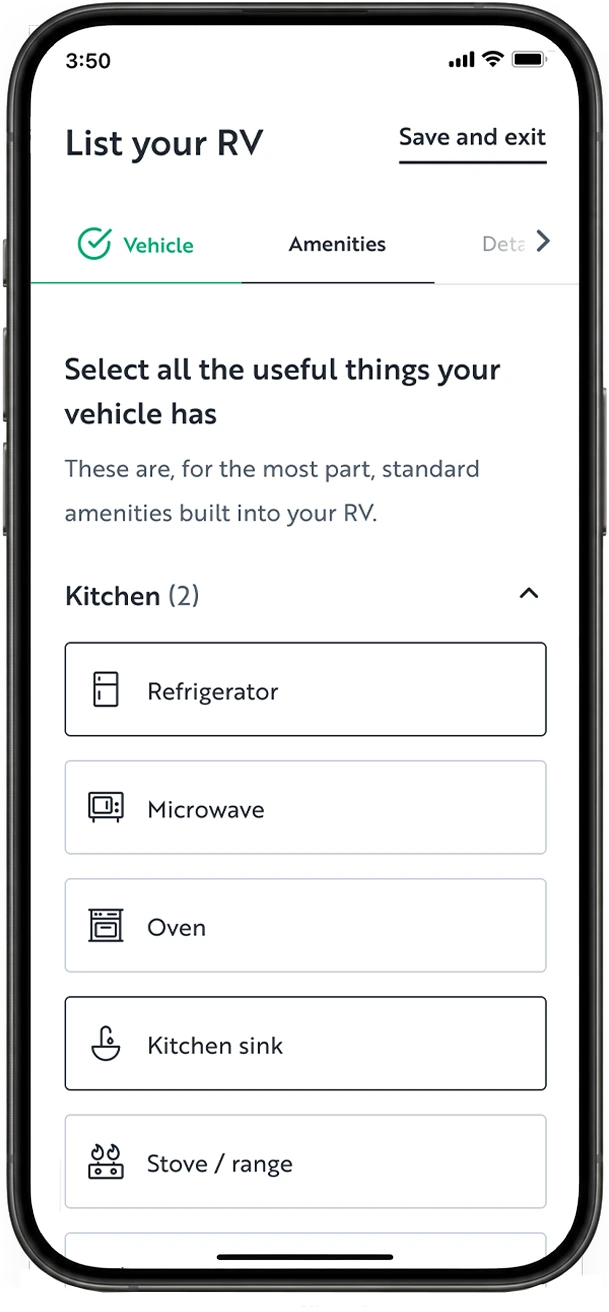
The listing flow turned the guidance hosts were getting from coach calls into shorter steps and tips in context. Hosts could start with a VIN or enter their vehicle details, see their progress, and save their work for later.
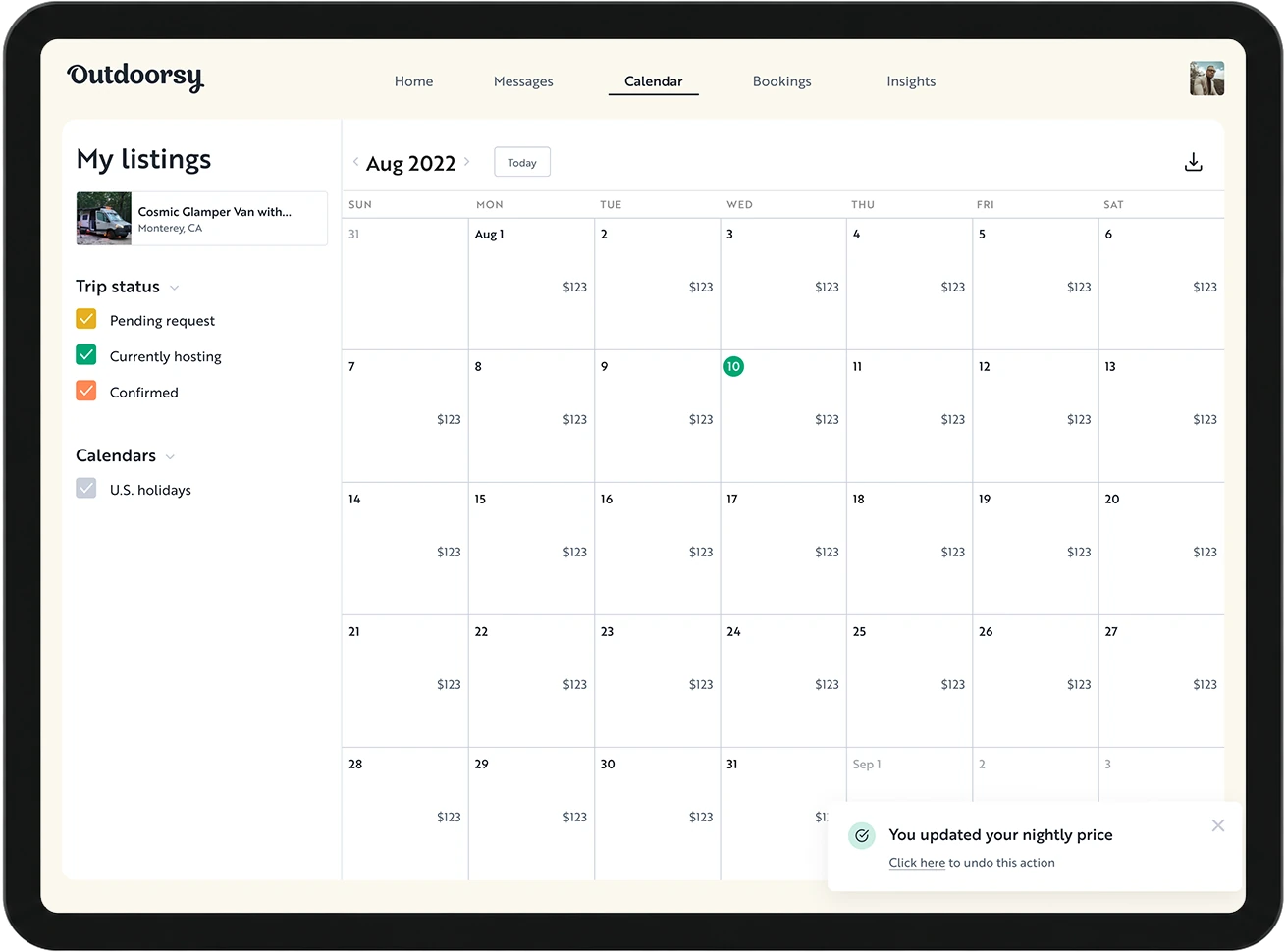
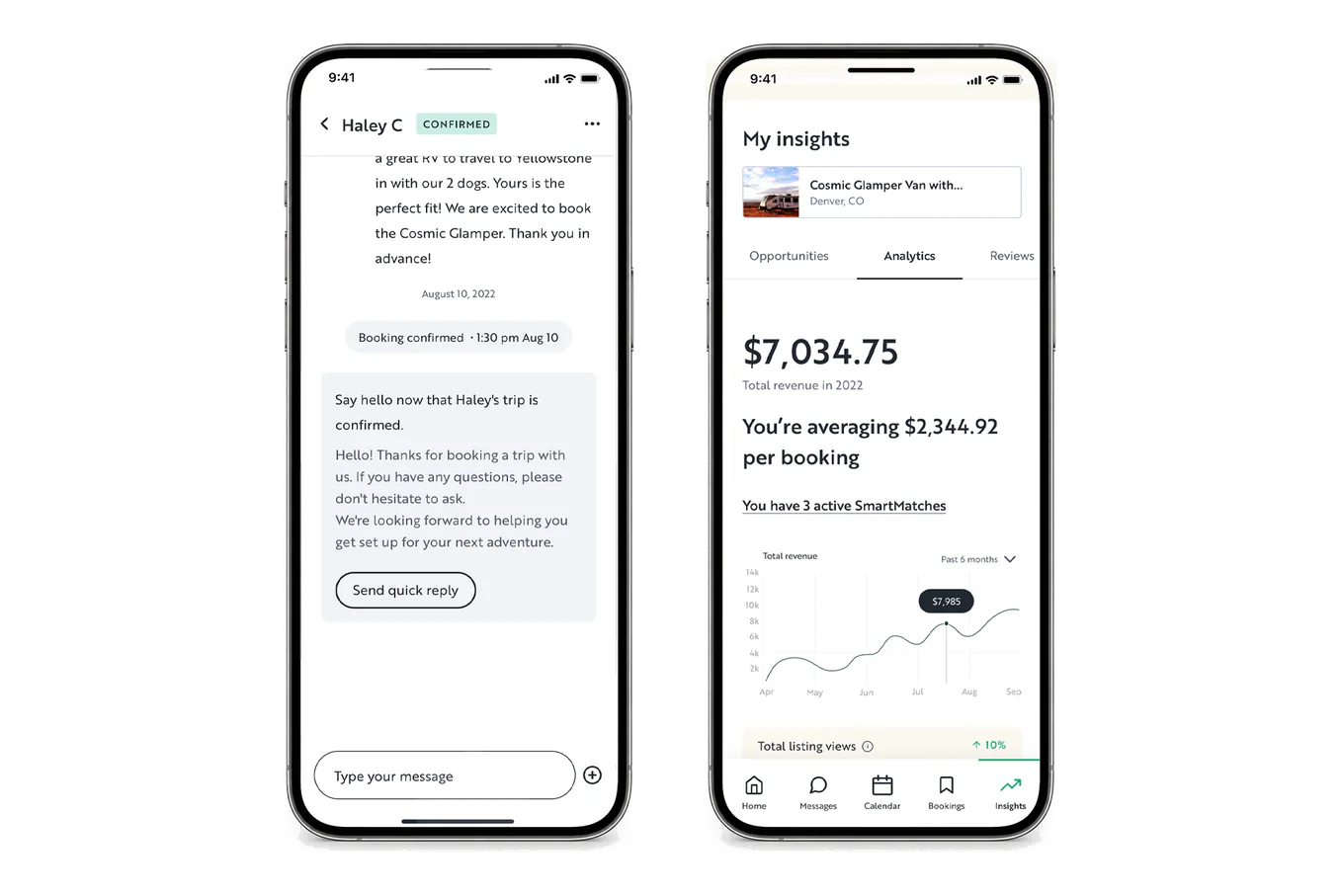
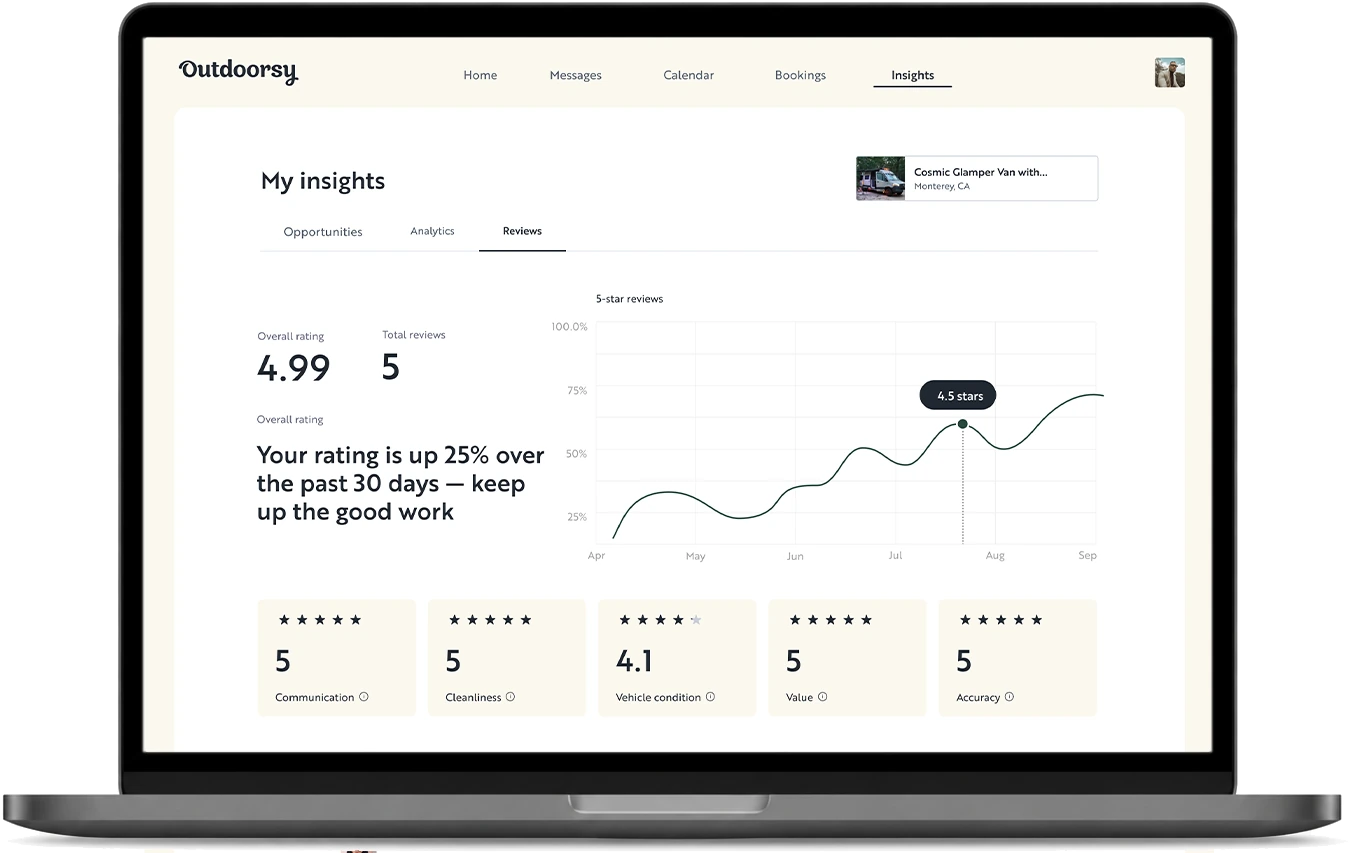
Once a listing was live, the dashboard brought upcoming trips, earnings, occupancy, and messages together. The calendar gave hosts a place to manage availability and pricing. Booking conversations kept trip details close at hand, and Insights showed total revenue and earnings per booking on web and mobile.
Brand design
Make hosting feel like part of the adventure.
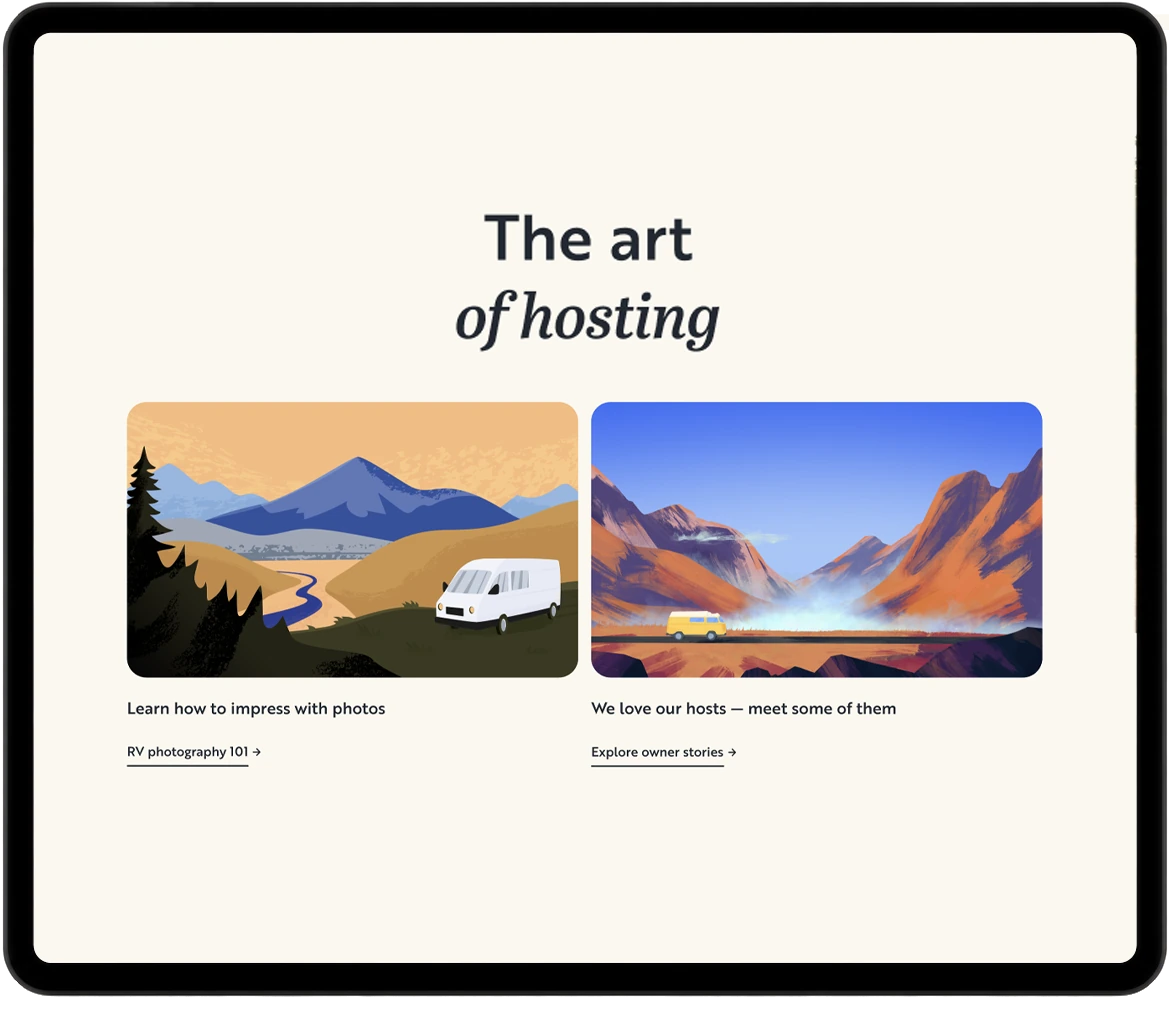
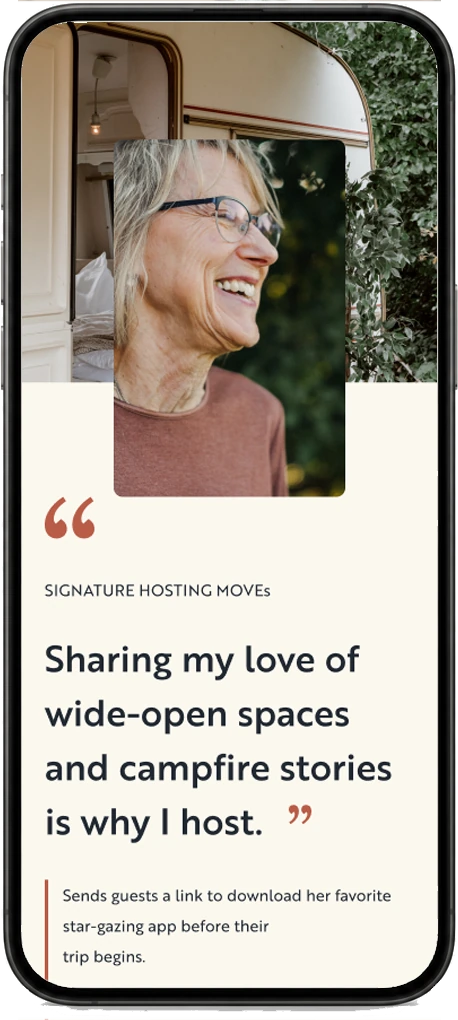
The refresh paired a warmer, earth-toned palette with Brother 1816 and Abril Titling. Photography centered real hosts and their rigs, while illustration helped make practical guidance feel at home in the brand.
Those choices showed up in the hosting experience itself. Host stories and how-to guides gave newcomers a sense of what to expect, and the listing prototype used the same photography, type, and voice to guide them through unfamiliar steps.
Design system
One system for brand and product.
The pattern library starts with atomic components: colors, text styles, and spacing tokens. These combine into larger patterns, including modals, carousels, and forms.
A master set of Figma Tokens publishes to Style Dictionary. Token changes reach both Figma components and production code through GitHub.
The documentation gives designers, developers, and product managers one place to find guidelines, process notes, and quick references. The system was a finalist in the 2023 zeroheight Design System of the Year awards.
A new set of tokens adapted the core system for Roamly, with component libraries for iOS, Android, and web.
From tokens to every experience
Figma Tokens provide the source of truth. Style Dictionary transforms them for each platform, and GitHub maintains version history. The web app, iOS app, Android app, email, and marketing site consume those tokens.
View the pipeline diagram · View the system overview · View the outcomes board
What it was for
The system aimed to help teams ship faster, give hosts a consistent experience, and make navigation and workflows clearer. Every designer and engineer adopted it, and it later extended to Roamly and glamping.